Got a pesky pimple that’s turning your complexion into a canvas of red? You’re not alone! Redness can be frustrating, but there are natural ways to tackle it without resorting to harsh chemicals. From cold compresses to soothing oils, you can calm that inflammation and get your skin back on track. Curious about how simple ingredients in your home can work wonders? Let’s explore some quick and effective remedies that can make all the difference!
Key Takeaway
- Embrace the chill! Apply a cold compress to your skin for 5-10 seconds to help constrict blood vessels and swiftly reduce redness and swelling. This simple step can provide immediate relief.
- Soothe your skin naturally! Incorporate soothing ingredients like niacinamide or aloe vera gel into your skincare routine to calm irritation and promote a balanced complexion. Just a few drops can make a big difference!
- Tap into nature’s goodness! Dab diluted tea tree oil on blemishes to harness its antibacterial and anti-inflammatory properties. This natural remedy can help clear up those pesky spots while supporting your skin’s health.
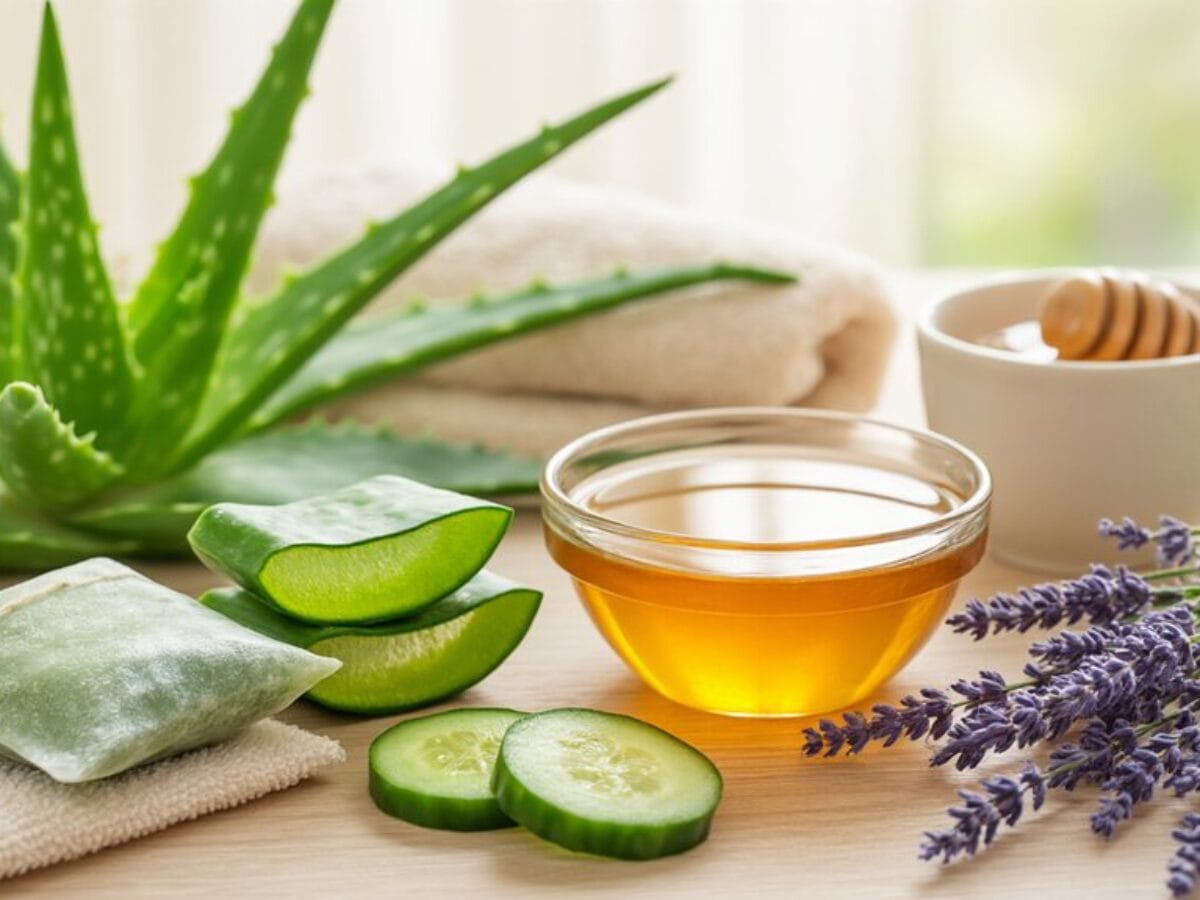
- Nurture with honey! Use honey or chamomile tea bags on your skin to gently calm redness and inflammation. Both are easy additions to your self-care routine that can enhance your skin’s glow.
- Commit to gentle cleansing! Maintain a consistent, gentle cleansing routine to keep your skin balanced and prevent clogged pores. Remember, a little care every day goes a long way in achieving clearer skin!
Cold Therapy for Instant Relief
When those pesky pimples pop up and your skin turns red, cold therapy can be your best friend for instant relief!
Applying a cold compress constricts blood vessels, which helps reduce redness and swelling remarkably. Just wrap some ice cubes in a cloth—never press them directly onto your skin, or you might end up with frostbite! This method is particularly beneficial for those with rosacea-prone skin, as it helps calm inflammation.
Applying a cold compress constricts blood vessels, reducing redness and swelling—just remember to wrap ice cubes in a cloth for safety!
Gently apply the cold compress for 5-10 seconds, repeating as necessary for quick relief. This cooling sensation not only soothes deep, painful pimples but also diminishes that fiery redness.
It works similarly to how ice reduces swelling after an injury, making it a simple yet effective method. Additionally, using face redness treatment products can enhance the effects of cold therapy. So grab that ice pack and give your skin the cooling comfort it deserves!
Topical Anti-inflammatory Ingredients
After giving your skin that invigorating chill with cold therapy, it’s time to amp up your anti-pimple game with topical anti-inflammatory ingredients.
Start with niacinamide, a superstar that reduces redness and inflammation while strengthening your skin barrier. Acne treatment products featuring salicylic acid are another must-have; it unclogs pores and fights bacteria, all while easing irritation.
Don’t forget benzoyl peroxide, which zaps pesky acne-causing bacteria. Aloe vera gel is your soothing friend—apply it for hydration and calmness.
Finally, vitamin C and topical retinoids like adapalene enhance your skin’s resilience and tackle inflammation head-on. Additionally, incorporating a niacinamide serum into your routine can significantly improve the appearance of dark spots and enhance overall skin tone.
Incorporating these ingredients into your routine can make a noticeable difference, transforming your skin from irritated to radiant in no time!
Natural Oils and Extracts
When it comes to tackling pimple redness, natural oils and extracts can be your best friends!
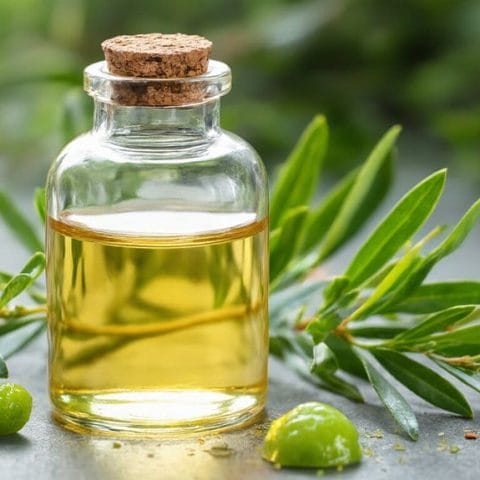
Tea tree oil is a powerhouse with its antibacterial and anti-inflammatory properties, but remember to dilute it with a carrier oil to keep your skin happy. Additionally, incorporating tea tree oil skincare products into your routine can enhance your results and provide long-term benefits.
On the other hand, witch hazel packs a punch with its tannins, helping to calm inflammation and prevent those pesky breakouts from leaving scars.
Tea Tree Oil Benefits
Tea tree oil is a powerhouse in the domain of natural remedies, boasting impressive antibacterial and anti-inflammatory properties that can transform your skincare routine.
When you apply it to your skin, it goes to work fighting the bacteria that cause acne while soothing inflammation. Just remember, it’s potent stuff! Always dilute tea tree oil with a carrier oil to avoid irritation.
You’ll love how it helps reduce redness and swelling, leaving your skin looking clearer and calmer. Plus, it’s easy to incorporate—just a drop on a cotton swab can target problem areas.
With consistent use, you’ll notice a significant improvement in your skin’s appearance. Say goodbye to those pesky pimples and hello to a healthier complexion!
Witch Hazel Effects
Witch hazel is a remarkable natural extract that offers a treasure trove of benefits for your skin, especially when it comes to reducing acne-related redness. Packed with tannins, it provides anti-inflammatory and antibacterial effects, helping to control breakouts and prevent scarring. You’ll love how it soothes irritated skin while promoting a clearer complexion!
Here’s a quick overview of witch hazel’s benefits:
| Benefit | Description | How to Use |
|---|---|---|
| Reduces Redness | Calms inflamed skin | Apply with a cotton ball |
| Controls Breakouts | Fights acne-causing bacteria | Use as a toner |
| Minimizes Scarring | Promotes healing of blemishes | Dab on scars after healing |
| Tightens Pores | Shrinks enlarged pores | Use regularly for best results |
| Soothes Irritation | Alleviates redness and discomfort | Apply as needed |
Embrace witch hazel for a natural glow!
Avoidance and Protective Measures
To effectively manage pimple redness, it’s vital to adopt certain avoidance and protective measures. By being mindful of your habits, you can greatly reduce inflammation and promote healing.
Adopting mindful habits can significantly reduce pimple redness and promote healing for healthier skin.
Here are some key practices to take into account:
- Don’t pick or pop your pimples; it can lead to worse redness and scarring.
- Use non-comedogenic sunscreen with SPF 30+ to shield your skin from UV rays that worsen redness.
- Stay hydrated; drinking enough water helps flush out toxins and reduces inflammation.
- Limit sugar and dairy intake, as these can trigger inflammation and worsen your breakouts.
Implementing these measures won’t only help combat redness but also support your overall skin health, making you feel more confident in your appearance!
Homemade Remedies for Quick Fixes
If you’re looking for quick fixes to tackle pimple redness, you’ve come to the right place! Homemade remedies can be super effective.
Try an aspirin paste made by crushing tablets and mixing them with water; apply it for 10-15 minutes to reduce swelling. Cold compresses work wonders too—just wrap ice cubes in a cloth and gently apply for short bursts.
You can also dab diluted tea tree oil on spots for its antibacterial properties. Chamomile tea bags, cooled and placed on your skin, can soothe inflammation.
Finally, a bit of honey can calm redness, thanks to its natural healing abilities. These quick fixes can give your skin the relief it needs—without breaking the bank!
Additional Calming Natural Remedies
When it comes to calming pimple redness, turmeric and zinc are your go-to allies.
Turmeric’s anti-inflammatory magic can work wonders in soothing irritated skin, making it a favorite ingredient in homemade masks.
On the other hand, zinc not only helps heal your skin but also reduces inflammation, giving you a double whammy of benefits in your fight against redness.
Turmeric’s Soothing Properties
While you might think of turmeric as just a spice for your favorite curry, this golden wonder has some serious soothing properties that can help calm your skin, especially when it’s dealing with the pesky redness of pimples.
Turmeric contains curcumin, an active compound known for its anti-inflammatory effects. When applied topically, it can reduce irritation, making it a fantastic natural remedy.
- Mix turmeric with honey for a nourishing face mask.
- Create a paste with turmeric and yogurt for added hydration.
- Use turmeric-infused oil to target specific areas of redness.
- Incorporate turmeric into your diet for overall skin benefits.
Zinc’s Healing Benefits
Zinc is a powerhouse mineral that can work wonders for your skin, especially when it comes to healing pesky pimples and reducing redness. This mineral helps regulate inflammation and speeds up the skin’s healing process, making it a go-to for battling breakouts.
You can incorporate zinc into your routine through supplements or topical creams. When applied, it can soothe irritated skin and diminish redness quickly. Plus, zinc’s antibacterial properties can help keep acne-causing bacteria at bay.
Think of it as your skin’s sidekick in the fight against those unwelcome blemishes! So, whether you’re looking for a supplement or a cream, adding zinc to your skincare arsenal might just be the boost your skin needs.
Regular Gentle Cleansing Routine
Establishing a regular gentle cleansing routine is essential for maintaining healthy skin and reducing pimple redness.
By treating your skin with care, you can prevent clogged pores and irritation, ultimately leading to a calmer complexion.
Here’s how to make your routine effective:
- Use a fragrance-free, non-comedogenic cleanser to avoid irritation.
- Wash your face twice daily—morning and night—to eliminate buildup.
- Gently massage the cleanser with your fingertips; scrubbing can worsen redness.
- Pat your skin dry with a clean towel; avoid rubbing to minimize irritation.
With consistency, this routine helps balance your skin’s natural oils and reduces inflammation.
Frequently Asked Questions
How Long Does Pimple Redness Usually Last?
Pimple redness usually lasts a few hours to a couple of days, depending on your skin type and the severity of the acne. You can help speed up the healing process with proper care.
Can Diet Really Affect Acne and Redness?
Yes, your diet can greatly affect acne and redness. Reducing sugar and dairy intake, while increasing antioxidant-rich foods, helps lower inflammation, leading to clearer skin and less redness in breakouts.
Is It Safe to Use Ice Directly on Skin?
No, it’s not safe to use ice directly on your skin. Always wrap ice cubes in a cloth to prevent frostbite, and apply gently for short intervals to avoid skin damage while reducing redness.
How Often Can I Apply Cold Compresses?
You can apply cold compresses every few hours for quick relief. Just make sure to limit each application to 5-10 seconds to avoid skin damage, and always wrap ice in a cloth for safety.
When Should I See a Dermatologist for Acne?
You should see a dermatologist for acne if your breakouts persist despite home treatments, worsen over time, cause significant pain or scarring, or if you experience severe side effects from over-the-counter products.
Final Thoughts
Reducing pimple redness naturally is totally achievable with just a few simple steps! By incorporating cold therapy, soothing ingredients, and gentle cleansing into your routine, you can calm inflammation and promote healthier skin. Remember, consistency is key, so stick with these methods and avoid those pesky triggers. With a little patience and care, you’ll be rocking that clear, radiant complexion in no time. Embrace the journey and enjoy the glow!