Hyaluronic acid (HA) is more than just a buzzword in skincare; it’s the powerhouse ingredient your routine might be missing. This unique polysaccharide not only retains moisture but also enhances skin elasticity and reduces fine lines. Its structure allows it to hold up to 1,000 times its weight in water, making it a hydration hero. Curious about how this molecular marvel works and its impact on your skin and joints? Let’s uncover the secrets behind HA’s structure.
Key Takeaway
- Embrace the power of hyaluronic acid: Incorporate products containing this superstar ingredient into your skincare routine to boost hydration and keep your skin glowing.
- Choose the right molecular weight for your needs: Opt for high molecular weight HA for surface hydration and a protective barrier, or low molecular weight HA to target deeper layers and promote rejuvenation.
- Hydrate from within: Remember to drink plenty of water daily; staying hydrated internally complements the moisture-retaining properties of hyaluronic acid in your skincare.
- Layer your skincare wisely: Apply hyaluronic acid serums on damp skin for enhanced absorption, ensuring you lock in that precious moisture for a plump and radiant complexion.
- Consistently nourish your skin: Make hyaluronic acid a staple in your daily routine to improve elasticity and diminish fine lines, helping you achieve that youthful glow you desire.
The Molecular Composition of Hyaluronic Acid
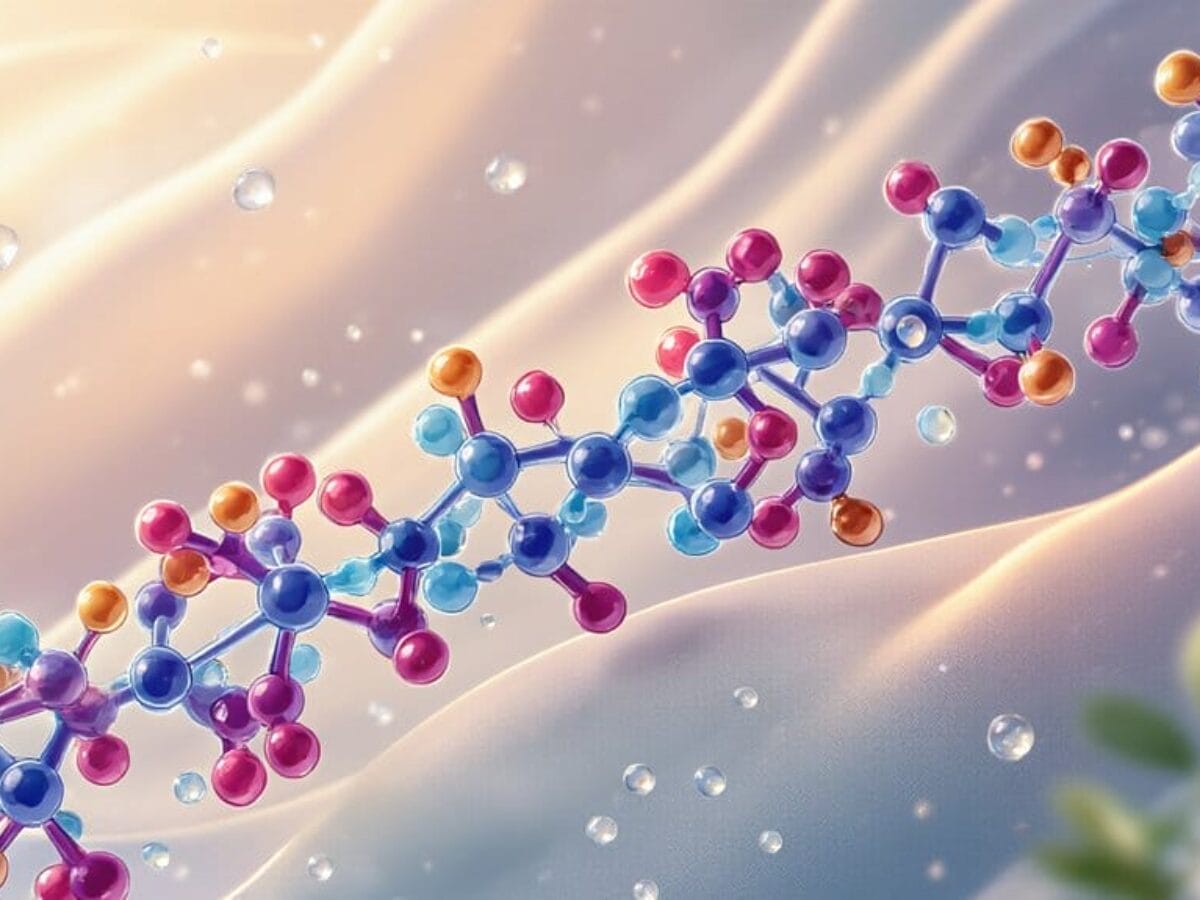
When you explore the molecular composition of hyaluronic acid, you’ll discover a fascinating world of repeating disaccharide units that play an essential role in its unique properties.
This remarkable polysaccharide is made up of D-glucuronic acid and N-acetyl-D-glucosamine, linked together by β-(1→4) and β-(1→3) glycosidic bonds. Notably, this structure is critical for hydration as it allows hyaluronic acid to attract and retain water molecules.
Imagine a long, unbranched chain that’s both flexible and resilient! With a molecular formula that hovers around C42H48N3O41.50Na3, hyaluronic acid can weigh anywhere from 5,000 to an astonishing 20,000,000 Da.
Its structure is stabilized by hydrogen bonds, creating a network that influences its ability to hold water. Additionally, this unique structure allows hyaluronic acid to retain moisture effectively, making it a vital ingredient in many skincare products.
Physical Properties and Their Importance
While diving into the physical properties of hyaluronic acid, you’ll uncover how these characteristics make it a powerhouse in various applications.
Its unique ability to retain moisture is nothing short of magic, making your skin look plump and youthful. With its viscoelastic nature, it acts like a natural lubricant and shock absorber, essential for joint health. Moreover, hyaluronic acid is a key ingredient in many hyaluronic acid oily skin moisturizers, which cater specifically to those with oily skin types.
Even at low concentrations, hyaluronic acid exhibits high viscosity, ensuring it can hydrate effectively without feeling heavy. Plus, its non-sulfated structure minimizes the risk of allergic reactions, making it safe for many uses. Additionally, combining hyaluronic acid with niacinamide serum can enhance skin barrier function and improve overall skin texture.
How Hyaluronic Acid Is Synthesized
To understand how hyaluronic acid is synthesized, you’ll appreciate the intricate dance of enzymes and substrates at play.
The process begins with hyaluronan synthases, which are your body’s little molecular workers. They combine UDP-glucuronic acid and UDP-N-acetylglucosamine to form the building blocks of hyaluronic acid. This synthesis involves converting glucose-6-phosphate through two distinct pathways, creating activated sugar nucleotides ready to assemble.
What’s fascinating is how these synthases regulate the chain length, ensuring uniform high molecular weight polymers. Plus, metal ions like Ca2+ help shape the final product, influencing how molecules pack and twist. Additionally, understanding the role of enzymes in this synthesis can provide insights into developing hyaluronic acid free skincare products.
Structural Organization of Hyaluronic Acid
When you look at hyaluronic acid, you’re seeing a fascinating linear polysaccharide that showcases unique helical conformations.
Its structure is shaped by dynamic hydrogen bonding, creating a network that influences everything from hydration to cellular interactions.
Understanding these features can really help you appreciate how this amazing molecule functions in the body and in various applications!
Linear Polysaccharide Characteristics
The fascinating structure of hyaluronic acid reveals its nature as a linear polysaccharide, showcasing a unique arrangement of repeating disaccharide units. These units consist of D-glucuronic acid and N-acetyl-D-glucosamine, linked by β-(1→4) and β-(1→3) glycosidic bonds.
This linear, unbranched chain allows hyaluronic acid to maintain remarkable flexibility. With a molecular weight that can reach millions, it’s like a superhero of hydration! Its structure is stabilized by hydrogen bonds, ensuring it retains water superbly.
This non-sulfated glycosaminoglycan isn’t just about moisture; it plays essential roles in joint lubrication and tissue support. So, if you’re looking for that youthful glow, remember: it’s all in the structure!
Helical Conformations Influence
While diving into the structural organization of hyaluronic acid, you’ll quickly discover that its helical conformations play a pivotal role in its functionality. These unique shapes not only enhance hydration but also affect how HA interacts with other molecules. By adopting specific helical structures, hyaluronic acid increases its ability to retain water and maintain tissue elasticity.
Here’s a quick overview of how these helical conformations influence HA:
| Feature | Influence on Functionality | Example |
|---|---|---|
| Helical Structure | Enhances water retention | Supports skin hydration |
| Molecular Packing | Affects viscosity | Provides shock absorption |
| Cation Coordination | Stabilizes structure in biological systems | Improves joint lubrication |
| Chirality | Impacts gel formation | Enhances tissue turgidity |
| Periodicity | Influences biological activity | Modulates cell interactions |
Understanding these influences helps you appreciate the versatility of hyaluronic acid!
Hydrogen Bonding Dynamics
Hydrogen bonding dynamics greatly shape the structural organization of hyaluronic acid, amplifying its remarkable properties.
These bonds contribute considerably to its unique characteristics. Here’s why you should appreciate this molecular magic:
- Water Retention: Hydrogen bonds help hyaluronic acid attract and hold onto water, keeping your skin hydrated and plump.
- Viscoelasticity: The dynamic nature of these bonds allows the molecule to stretch and compress, providing cushioning in joints and pliability in skin.
- Structural Stability: Intramolecular and intermolecular hydrogen bonds stabilize the polymer, ensuring it maintains its integrity under various conditions.
The Role of Molecular Weight in Functionality
When it comes to hyaluronic acid, molecular weight plays a vital role in determining its functionality.
High molecular weight HA is fantastic for water retention and providing that much-needed cushioning in joints, while low molecular weight variants can enhance cell signaling and tissue repair.
High Molecular Weight Benefits
Molecular weight plays a crucial role in the functionality of hyaluronic acid (HA), and understanding this connection can reveal the remarkable benefits of high molecular weight HA.
You’ll love how it enhances your skin’s hydration and liveliness! Here are three key benefits:
- Superior Moisture Retention: High molecular weight HA can hold up to 1,000 times its weight in water, making your skin plump and hydrated.
- Enhanced Barrier Function: It forms a protective layer, reducing moisture loss and shielding against environmental aggressors.
- Improved Elasticity: By promoting collagen synthesis, high molecular weight HA helps maintain skin firmness and elasticity, combating signs of aging.
Embrace high molecular weight HA in your skincare routine for a youthful, dewy glow!
Low Molecular Weight Effects
While high molecular weight hyaluronic acid (HA) has its impressive benefits, low molecular weight HA also deserves the spotlight for its unique effects and functionalities.
This smaller molecule penetrates your skin more easily, delivering hydration deep into the dermal layers. Its lightweight structure promotes cell migration and enhances skin elasticity, giving you that youthful bounce you crave.
Additionally, low molecular weight HA supports wound healing by modulating inflammation, making it a superhero in your skincare routine. You’ll find it in serums and moisturizers designed for intense hydration without feeling heavy.
Tailoring Molecular Weight Applications
Understanding the role of molecular weight in hyaluronic acid (HA) applications is essential for maximizing its benefits. The molecular weight of HA can dramatically influence its functionality, so here’s what you need to know:
- Hydration: High molecular weight HA excels at retaining moisture, making it perfect for anti-aging skincare products.
- Viscoelasticity: Low molecular weight HA provides better penetration, enhancing absorption and delivering hydration deep into the skin.
- Healing: Certain molecular weights promote cell migration and tissue repair, making HA invaluable in wound healing treatments.
Biological Functions of Hyaluronic Acid
Hyaluronic acid (HA) plays a starring role in the biological landscape, serving as a multifunctional hero in our bodies.
You mightn’t realize it, but HA’s ability to retain water keeps your tissues hydrated and plump. Its high molecular weight and linear structure give it the unique properties that support lubrication in joints, acting like a natural shock absorber.
Beyond that, HA aids in cell migration and proliferation, essential for wound healing and tissue regeneration. Plus, its biocompatibility means it’s safe and effective.
HA not only supports cell migration and proliferation but also ensures safe and effective wound healing and tissue regeneration.
Whether it’s helping you bounce back from injuries or keeping your skin looking fresh, HA’s biological functions are truly impressive.
Applications in Skincare and Medicine
As you explore the world of skincare and medicine, you’ll quickly discover the remarkable applications of hyaluronic acid (HA) that can transform health and beauty routines.
This powerhouse ingredient is celebrated for its ability to retain moisture and boost overall skin health.
Here are three key applications of HA:
- Skin Hydration: HA draws moisture into the skin, keeping it plump and youthful, making it a staple in serums and moisturizers.
- Anti-Aging Treatments: By improving skin elasticity, HA helps reduce the appearance of fine lines and wrinkles, giving you that sought-after glow.
- Wound Healing: In medical settings, HA promotes faster healing and reduces scarring, proving invaluable for both cosmetic and therapeutic uses.
Embrace HA, and reveal your skin’s natural moisture secret!
The Impact of Hyaluronic Acid on Joint Health
When it comes to joint health, your body benefits immensely from the remarkable properties of hyaluronic acid (HA). This powerful molecule acts as a lubricant and shock absorber in your joints, keeping them smooth and pain-free.
HA’s ability to retain water makes it vital for maintaining synovial fluid, the thick liquid that nourishes and protects your cartilage. When you move, HA supports the joints by cushioning them against impact, reducing wear and tear.
Plus, its viscoelastic nature guarantees that your joints can glide effortlessly during activities. Whether you’re jogging or just reaching for that top shelf, hyaluronic acid’s role in joint health is essential.
Future Directions in Hyaluronic Acid Research
While the current understanding of hyaluronic acid (HA) has paved the way for numerous applications, the future of HA research holds even more exciting possibilities.
Here are three directions to keep an eye on:
- Advanced Drug Delivery Systems: Researchers are exploring HA’s potential as a carrier for targeted drug delivery, enhancing treatment efficacy while minimizing side effects.
- Regenerative Medicine: The role of HA in tissue engineering is gaining traction. Future studies may reveal its potential in wound healing and organ regeneration.
- Personalized Skincare: With ongoing advancements in biotechnology, HA formulations could be tailored to individual skin types, maximizing hydration and anti-aging benefits.
As you can see, the future of HA is bright, promising innovative solutions that could revolutionize skincare and medicine!
Frequently Asked Questions
Can Hyaluronic Acid Be Used for Acne Treatment?
Yes, hyaluronic acid can help treat acne. It hydrates your skin without clogging pores, reduces inflammation, and promotes healing. Incorporating it into your routine can enhance moisture levels and improve overall skin texture.
What Are the Side Effects of Hyaluronic Acid?
You might experience mild side effects from hyaluronic acid, like redness, swelling, or irritation at the application site. Allergic reactions are rare, but if you notice severe symptoms, consult a healthcare professional immediately.
How Does Hyaluronic Acid Compare to Other Hydrators?
Hyaluronic acid outperforms many hydrators due to its ability to retain moisture and provide viscoelasticity. Unlike heavier oils, it absorbs quickly, leaving your skin plump without feeling greasy, making it an excellent choice for hydration.
Is Hyaluronic Acid Safe for All Skin Types?
Yes, hyaluronic acid’s safe for all skin types. It hydrates without clogging pores, making it suitable for oily, dry, or sensitive skin. You can confidently incorporate it into your skincare routine without worries.
How Often Should I Use Hyaluronic Acid Products?
You should use hyaluronic acid products daily for ideal hydration. Apply it after cleansing and before moisturizing, adjusting frequency based on your skin’s needs. Consistency helps maintain moisture levels and improves overall skin appearance.
Final Thoughts
Incorporating hyaluronic acid into your skincare routine isn’t just a trend; it’s a game-changer! This powerhouse polysaccharide not only hydrates your skin but also supports collagen production, giving you that youthful glow. With its incredible ability to retain moisture, your skin can feel plumper and more elastic. So, why not reveal the secret to radiant skin? Immerse yourself in the world of hyaluronic acid and watch your skin transform—hydration awaits!