
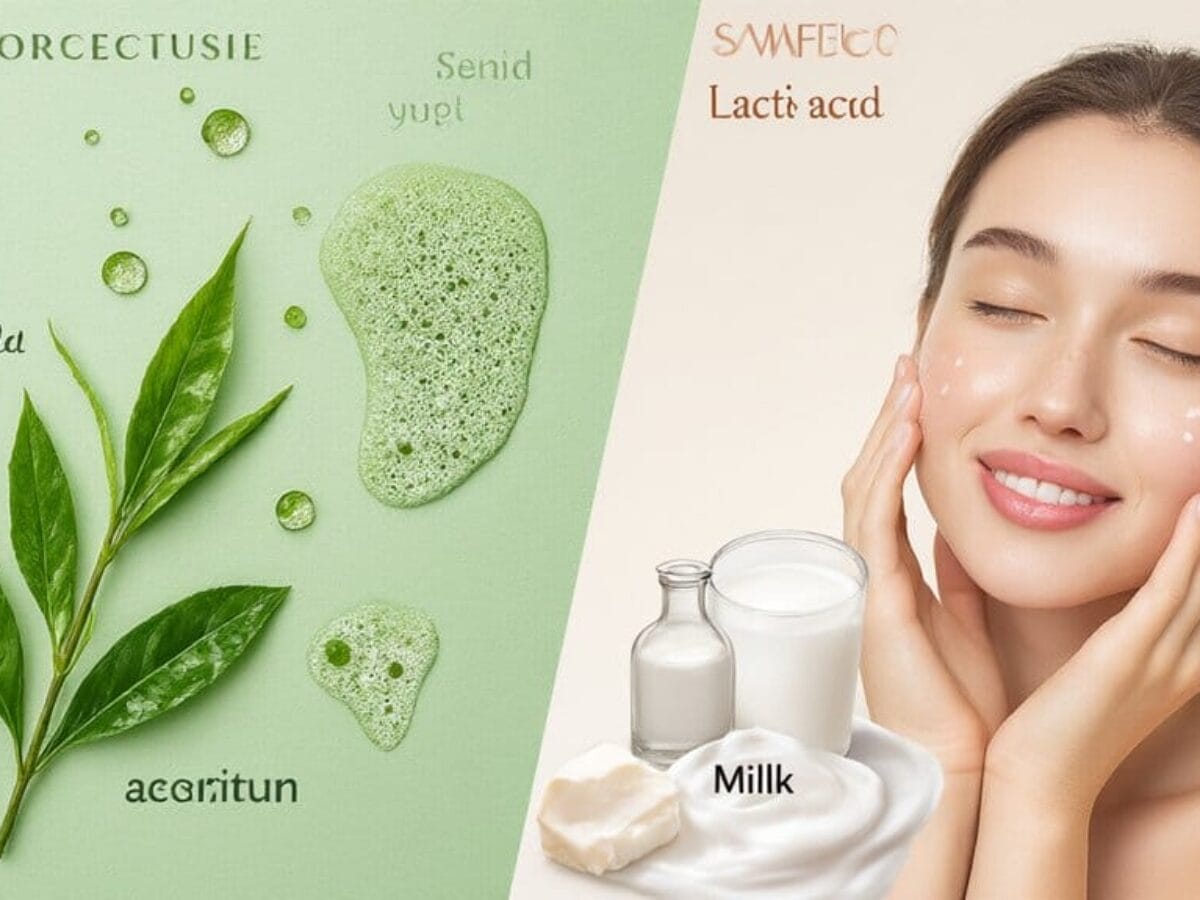
When it comes to transforming your skin, salicylic acid and lactic acid are two heavyweights you shouldn’t overlook. Salicylic acid dives deep to tackle acne and oily skin, while lactic acid offers gentle exfoliation and hydration for a radiant glow. But how do you choose the right one for your unique skin type? Let’s explore the benefits and suitability of each to find out which acid can truly elevate your skincare game.
Key Takeaway
- Choose wisely for your skin type! If you have oily or acne-prone skin, consider incorporating salicylic acid into your routine for effective breakout management. For dry or sensitive skin, opt for lactic acid to gently exfoliate and nourish your skin.
- Target specific concerns! Use salicylic acid for deep pore cleansing and to prevent future acne flare-ups, while lactic acid can help improve uneven texture and boost hydration, giving your skin that luminous glow.
- Embrace regularity! Make salicylic acid a staple in your routine to keep pesky breakouts at bay, or apply lactic acid consistently for enhanced collagen production and a youthful appearance.
- Don’t forget the sunscreen! Protect your skin’s newfound radiance by applying sunscreen daily when using these acids, ensuring you shield your skin from UV damage and maximize its benefits.
- Start today! Take a moment to assess your skin’s needs and choose the right acid to elevate your skincare game. You’ve got this, and your skin will thank you!
Understanding Salicylic Acid and Its Benefits for Indian Skin
When it comes to tackling oily and acne-prone skin, salicylic acid (SA) stands out as a powerhouse ingredient that can transform your skincare routine.
This oil-soluble beta hydroxy acid dives deep into your pores, dissolving the pesky keratin that clogs them up. Think of it as your skin’s personal bouncer, kicking out unwanted guests like blackheads and breakouts.
Salicylic acid is your skin’s personal bouncer, diving deep to dissolve keratin and banish blackheads and breakouts.
For Indian skin, where excess sebum can lead to acne, SA shines bright. Its anti-inflammatory properties soothe your skin while targeting both inflammatory and non-inflammatory lesions. Additionally, incorporating salicylic acid benzoyl peroxide products can enhance your acne-fighting regimen. Regular use of salicylic acid skincare products can also help in preventing future breakouts.
Just remember, overdoing it can lead to dryness, so don’t skip your moisturizer!
With consistent use, you’ll notice clearer, smoother skin, making SA a must-have in your arsenal against acne.
Exploring Lactic Acid and Its Advantages for Indian Skin
As you explore the world of skincare, lactic acid (LA) emerges as a gentle yet effective ally, especially for Indian skin types that often grapple with dryness and pigmentation.
LA’s water-soluble nature means it works primarily on the skin’s surface, breaking down the bonds that hold dead skin cells together. This gentle exfoliation reveals brighter, smoother skin without the harshness that can irritate sensitive types. Additionally, many skin complexion care products feature lactic acid as a key ingredient to enhance their efficacy.
Not only does it hydrate, but it also stimulates collagen production, helping to minimize fine lines and enhance overall texture.
If you’ve struggled with dullness or uneven skin tone, LA can be a game-changer. Embrace its benefits, and watch your skin transform into a vibrant canvas that reflects your inner beauty! Additionally, incorporating lactic acid skincare products into your routine can amplify these results and improve skin health.
Suitability of Salicylic Acid for Different Skin Types
If you’ve got oily or acne-prone skin, salicylic acid might just become your new best friend!
This powerhouse ingredient penetrates deep into your pores, tackling stubborn blackheads and breakouts while keeping excess oil in check.
You’ll love how it clears your skin and reduces inflammation, all while helping you achieve that fresh, clear complexion you’ve been dreaming of! Additionally, incorporating hyaluronic acid serum can enhance hydration and support your skin’s barrier, making it an excellent complement to your acne care routine.
Oily Skin Benefits
Struggling with oily skin? You’re not alone! Salicylic acid (SA) can be your best ally in battling excess oiliness. It penetrates deep into your pores, dissolving the keratin that clogs them, effectively clearing out blackheads and whiteheads. Plus, its anti-inflammatory properties help soothe irritated skin, making it a great choice for those pesky breakouts.
| Benefit | Explanation |
|---|---|
| Deep Pore Cleansing | Dissolves oil and debris in pores |
| Reduces Inflammation | Soothes redness and irritation |
| Controls Sebum | Regulates oil production for a matte finish |
With regular use, you’ll notice smoother, clearer skin. Just remember to pair it with a good moisturizer to keep your skin hydrated and happy!
Acne-Prone Skin Efficacy
Finding the right treatment for acne-prone skin can feel like searching for a needle in a haystack, but salicylic acid (SA) stands out as a powerful ally in this quest. Its oil-soluble nature allows it to dive deep into your pores, tackling stubborn acne effectively.
Here’s why SA is your go-to:
- Clears clogged pores by dissolving dead skin cells.
- Reduces inflammation, calming angry breakouts.
- Targets blackheads and whiteheads, preventing future flare-ups.
- Balances oil production, keeping your skin fresh.
Using salicylic acid regularly can transform your skin, reducing acne and enhancing your confidence.
Just remember to moisturize afterward, as SA can be a bit drying. Embrace the journey to clearer skin!
Suitability of Lactic Acid for Different Skin Types
When it comes to choosing lactic acid for your skincare routine, understanding its suitability for different skin types can elevate your glow game markedly.
If you’ve got dry or sensitive skin, lactic acid is your best friend! Its gentle exfoliation hydrates while removing dead skin cells, giving you that radiant boost.
For those with hyperpigmentation, lactic acid’s resurfacing properties can help fade those pesky dark spots without causing irritation.
Even if your skin’s somewhere in between, it’s still a great match! You’ll find that it balances moisture and promotes a smoother texture.
For combination skin, lactic acid is a fantastic choice, balancing moisture while enhancing texture for a flawless finish.
Just remember, introducing it gradually is key to avoiding any surprises.
Addressing Common Skin Concerns With Salicylic Acid
For those dealing with pesky acne, blackheads, or oily skin, salicylic acid might just be your secret weapon! This powerful beta hydroxy acid dives deep into your pores, breaking down the gunk that clogs them.
Here’s how it can address your skin concerns:
- Acne Treatment: Reduces inflammation and clears existing breakouts.
- Blackhead Buster: Dissolves dead skin cells, preventing blackheads from forming.
- Oil Control: Regulates sebum production, keeping your skin shine-free.
- Exfoliation: Promotes cell turnover, revealing fresher, brighter skin.
With consistent use, you’ll see fewer blemishes and a smoother complexion.
Just remember to pair it with a good moisturizer and sunscreen, as salicylic acid can be drying. Happy skin transformation!
Addressing Common Skin Concerns With Lactic Acid
If you’re looking to revitalize your skin and tackle issues like dullness, uneven texture, or fine lines, lactic acid might just be your new best friend!
This gentle alpha hydroxy acid works wonders on dry or sensitive Indian skin, promoting hydration and enhancing your skin’s natural glow. It breaks down the bonds that hold dead skin cells together, allowing for smooth, fresh skin to shine through.
Plus, lactic acid stimulates collagen production, which helps reduce those pesky fine lines. If pigmentation’s your concern, it gently fades dark spots without causing irritation.
Potential Side Effects of Salicylic Acid and Lactic Acid
When using salicylic acid or lactic acid, you might face some potential side effects like dryness and irritation, especially if you’ve got sensitive skin.
Both acids can also ramp up your sun sensitivity, making daily sunscreen a must to protect your skin from unwanted damage.
That’s why patch testing is key; it helps you gauge how your skin reacts before fully committing to these powerful ingredients!
Dryness and Irritation Risks
While both salicylic acid (SA) and lactic acid (LA) offer fantastic benefits for your skin, they can also come with a few pesky side effects, especially when it comes to dryness and irritation.
Here’s what you need to know:
- Salicylic Acid: Can lead to dryness and flaking, particularly for sensitive skin types.
- Lactic Acid: Generally milder but may still cause irritation if overused or not paired with hydration.
- Skin Type Matters: Oily skin may tolerate SA better, while dry skin might find LA more suitable.
- Moisturizing is Key: Always follow with a good moisturizer to counteract any dryness and maintain skin balance.
Stay attentive to your skin’s reaction, and remember, a little goes a long way!
Sun Sensitivity Concerns
As you explore the world of salicylic acid (SA) and lactic acid (LA), it’s essential to recognize their effects on sun sensitivity.
Both acids can make your skin more vulnerable to UV damage, which means sunscreen isn’t just a suggestion; it’s a must! Without protection, you risk sunburn, pigmentation, and premature aging—definitely not the glow you’re aiming for.
While SA might dry out your skin, LA can hydrate it, but both require diligent sun care. If you’re new to these acids, start slow, and always layer on that SPF.
Your skin deserves the best, and keeping it safeguarded from the sun will help you enjoy the full benefits of these fantastic exfoliants without the nasty side effects!
Patch Testing Importance
Sun protection is just the beginning of your journey with salicylic acid (SA) and lactic acid (LA).
Before diving into these acids, patch testing is essential for your skin’s safety. Here’s why:
- Check for Sensitivity: Identify any allergic reactions or irritation before applying on your entire face.
- Tailor Your Routine: Understand how your skin reacts to each acid, helping you customize your regimen.
- Prevent Overuse: Gauge how often you can safely use SA and LA without causing dryness or redness.
- Avoid Unwanted Breakouts: Spot testing can help prevent exacerbating existing skin issues.
Recommended Concentrations and Formulation Specifics
Steering through the world of skincare acids can feel like a maze, but understanding recommended concentrations and formulation specifics can make it a lot easier.
For salicylic acid, aim for concentrations between 0.5% to 2%, with a pH around 3.0–4.0 to guarantee effective pore-clearing action.
On the other hand, lactic acid works wonders at 5% to 10% concentration, ideally between pH 3.5–4.0 for gentle exfoliation.
Look for products that blend these acids with soothing ingredients like hyaluronic acid to counteract potential irritation.
Home chemical peels specifically designed for Indian skin can tackle issues like post-acne pigmentation.
Strategies for Optimal Skin Transformation With Both Acids
To achieve ideal skin transformation using both salicylic acid and lactic acid, it’s essential to craft a tailored approach that considers your unique skin type and concerns.
Craft a personalized routine with salicylic and lactic acid for optimal skin transformation tailored to your unique concerns.
Here are some strategies to maximize their benefits:
- Identify Your Skin Type: Determine if your skin is oily, dry, or sensitive to choose the right acid combination.
- Start Slow: Introduce each acid gradually to avoid irritation; maybe start with once a week.
- Moisturize: Always follow up with a hydrating moisturizer to combat dryness, especially after using salicylic acid.
- Sun Protection: Daily sunscreen is a must since both acids can increase sun sensitivity.
With patience and consistency, you’ll reveal the full potential of your skin transformation journey!
Frequently Asked Questions
Can I Use Both Acids Together in My Skincare Routine?
Yes, you can use both acids together in your skincare routine. Just alternate them or layer with caution, and always monitor your skin’s reaction. Don’t forget to apply sunscreen daily for protection!
How Often Should I Use Salicylic or Lactic Acid?
You should use salicylic acid 1-3 times a week, depending on your skin’s tolerance. For lactic acid, start with 1-2 times weekly. Adjust frequency based on your skin’s response to avoid irritation.
Are There Any Foods That Enhance These Acids’ Effectiveness?
Yes, incorporating foods rich in antioxidants, like berries and leafy greens, can enhance these acids’ effectiveness. Staying hydrated, consuming omega-3 fatty acids, and avoiding processed sugars also support skin health while using these products.
Can These Acids Be Used During Pregnancy?
You should avoid using salicylic acid during pregnancy due to potential risks. Lactic acid is generally considered safer but it’s best to consult your healthcare provider to guarantee it’s appropriate for your specific situation.
What Should I Do if My Skin Reacts Negatively?
If your skin reacts negatively, stop using the product immediately. Rinse your face with cool water, apply a soothing moisturizer, and consider consulting a dermatologist for personalized advice and treatment options tailored to your skin’s needs.
Final Thoughts
In the battle of salicylic acid versus lactic acid, it ultimately comes down to your skin’s unique needs. If you’re tackling acne and excess oil, salicylic acid is your new best friend. For dry or sensitive skin, lactic acid will be your hydration hero. Whichever you choose, both acids can transform your skin and boost your confidence. So, embrace these powerful ingredients and watch your skin glow like never before! Your radiant journey starts now!